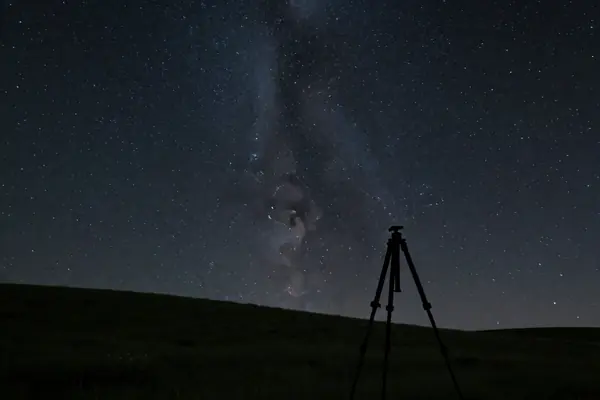
SHOT NOISE
Light arrives in drops
Photons arrive discretely, independently and randomly, like the first drops of a shower. Catch only a few and the count varies from pixel to pixel: that variation is noise.
See the numbers myrandomphoto
00THE PHYSICS OF GRAIN

Light arrives in random drops.
In bright light the randomness evens out. In dim light each pixel catches only a few photons, and the count jumps about from pixel to pixel: that is the speckle you see. Physics courses and photography tutorials explain why, and what helps.
Check a shot01Principles
02THE SHORT ANSWER
Grain is mostly statistics.
Three ideas explain most of it.
SHOT NOISE
Photons arrive discretely, independently and randomly, like the first drops of a shower. Catch only a few and the count varies from pixel to pixel: that variation is noise.
See the numbersISO
A higher ISO works by amplifying the signal from the sensor, and that amplifies the noise too. Higher ISO speeds give progressively more noise.
Check a shotAVERAGING
Random noise rises and falls around the true value, so averaging identical shots evens it out. Four frames halve it, a trick astrophotographers rely on.
How to do it03A QUICK SHOT CHECK
Pick a situation to see which kind of noise to expect. The bar shows how much visible noise the tutorials say it tends to produce.
Based on Cambridge in Colour's tutorials on digital camera image noise and image averaging. General photography information.
04TWO NUMBERS WORTH KNOWING
One number on counting photons,
one on averaging frames.
≈ 3.2 electrons
Noise on 10 photo-electrons
Photon arrivals follow Poisson statistics, so the noise is the square root of the average count. A star giving 10 photo-electrons a second has noise of about 3.2 in one second; over 10 seconds it gives 100, with noise of 10.
PHOTON NOISE · RIT DETECTORS COURSE
4 frames
Frames averaged to halve random noise
Noise fluctuation drops by the square root of the number of images averaged. Two averaged frames at ISO 400 are comparable to one taken at ISO 200.
AVERAGING · CAMBRIDGE IN COLOUR
The CCD image sensor was invented in 1969 by Willard Boyle and George Smith at Bell Laboratories, and earned them a share of the 2009 Nobel Prize in Physics.
05FOUR HABITS TO TRY
None of these needs new equipment. They follow from the square-root rule: more light and more frames beat amplifying a weak signal.
When photon noise dominates, the signal-to-noise ratio grows with the square root of the exposure time, so a longer exposure helps.
Higher ISO amplifies the noise along with the picture, so keep it as low as the scene allows.
On a tripod, take identical shots and average them. It raises the signal-to-noise ratio without softening detail; it does not suit hand-held shots.
Heat makes fixed pattern noise worse in very long exposures, and cooling a sensor reduces dark current.

06THE OTHER NOISES
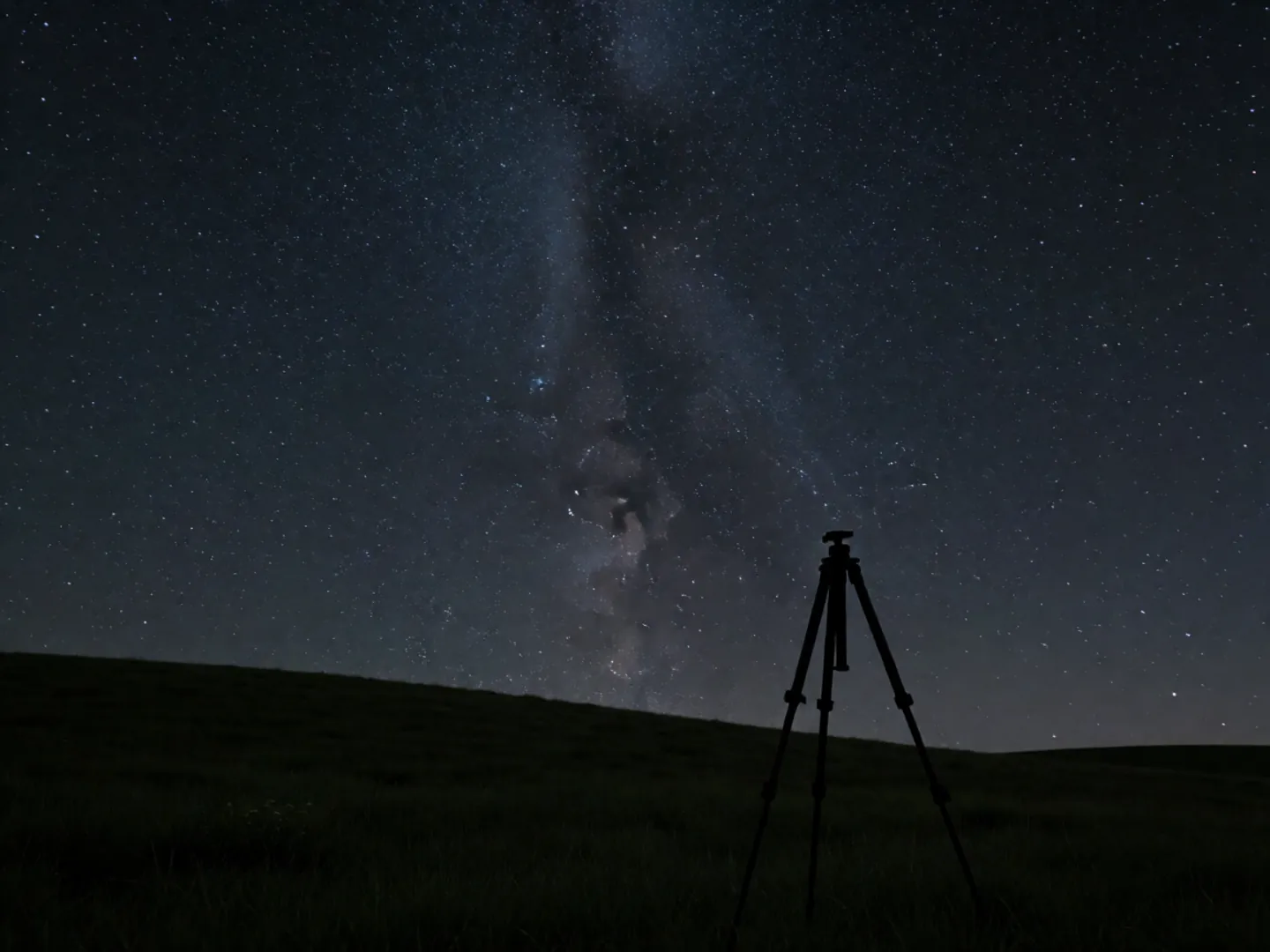
A sensor is not silent even in the dark. Read noise comes from the electronics as each pixel's charge is read out, and it does not depend on how much light arrived. Dark current is charge made by heat, and it builds up during long exposures.
Lund University's lab notes say photon shot noise is the main noise source, that dark current noise is not really relevant until exposures of several seconds, and that fixed pattern noise can now generally be ignored in consumer cameras.
07Questions
Cambridge in Colour calls image noise the digital equivalent of film grain. It can spoil detail, but some photographers like it for an old-fashioned, grainy look.
Photons arrive randomly, and the noise is the square root of how many a pixel collects. With few photons that randomness is large compared with the picture, so it shows as speckle.
A higher ISO amplifies the image signal in the camera, and that also amplifies the noise, so higher ISO speeds produce progressively more noise.
Often hot pixels, a kind of fixed pattern noise that shows in very long exposures and gets worse with heat. Because they repeat in the same places, they can be subtracted.
Walter Schottky introduced the idea in 1918 while studying fluctuations of current in vacuum tubes. The same statistics apply to photons reaching a sensor.
08Sources
ABOUT THIS NAME
myrandomphoto.com is part of the DoodleSale portfolio. It isn't in an auction right now, but you can ask about leasing it.